The Benefits of the Kettlebell Swing
The swing is the single most useful thing you can do with one kettlebell. It builds the back of your body, trains your heart and teaches you to move your hips with force — all in a few square feet of floor. Here is what it does, how to do it well, and how we coach it at Liberty Bells in Leander, TX.
What the Swing Gives You
Posterior Chain Strength
The swing is a hinge, not a squat. Glutes, hamstrings and spinal erectors produce the power, which builds the exact muscles most desk-bound people never train.
Conditioning Without Running
Hard-style swings drive heart rate high in short bursts, then let it drop between sets. You get real cardiovascular work with no pounding on knees or ankles.
Explosive Hip Power
Every rep is a fast, forceful hip snap. That same pattern shows up in sprinting, jumping and picking things up off the ground safely.
Grip and Forearm Strength
Holding a moving bell for timed sets builds grip endurance that carries over to deadlifts, carries, pull-ups and everyday loads.
Posture and Core Control
The lockout is a standing plank. Bracing the midsection and locking the ribcage down on every rep teaches a tall, stacked, stable spine.
Time Efficiency
One bell, a few square feet and ten to fifteen minutes is a full-body session. That is why the swing anchors so much of our programming.
How to Swing Well
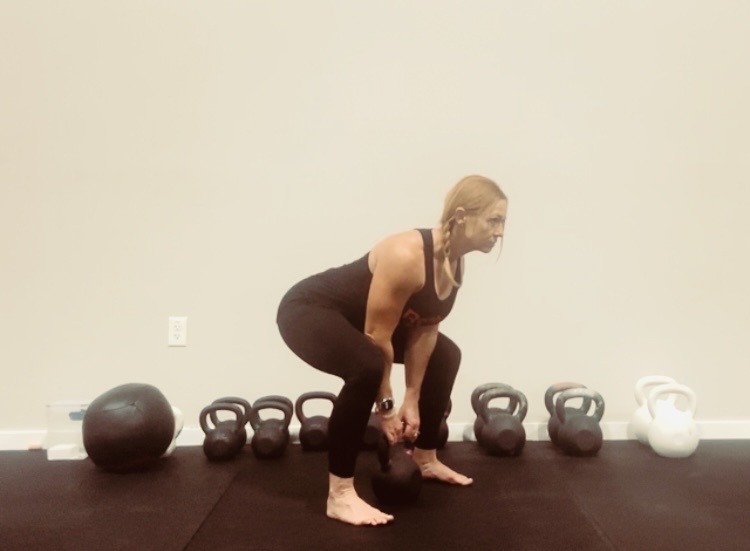
- 1. Set the hinge. Feet about shoulder width, bell a foot in front of you. Push the hips back, keep the spine long, and reach for the handle.
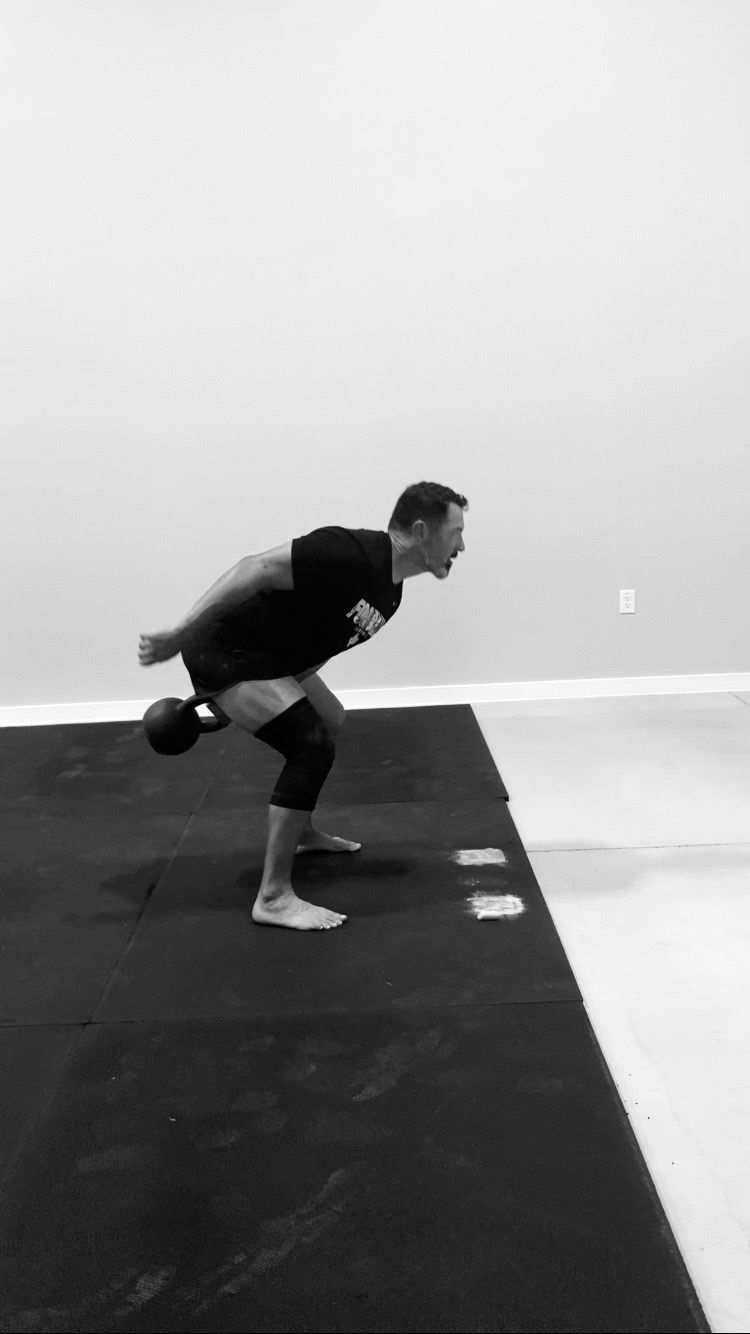
- 2. Hike it back. Tip the bell toward you and hike it high between the thighs, close to the body — not down by the knees.
- 3. Snap the hips. Stand up fast. Glutes tight, ribs down, arms along for the ride. The bell floats; you never lift it with your shoulders.
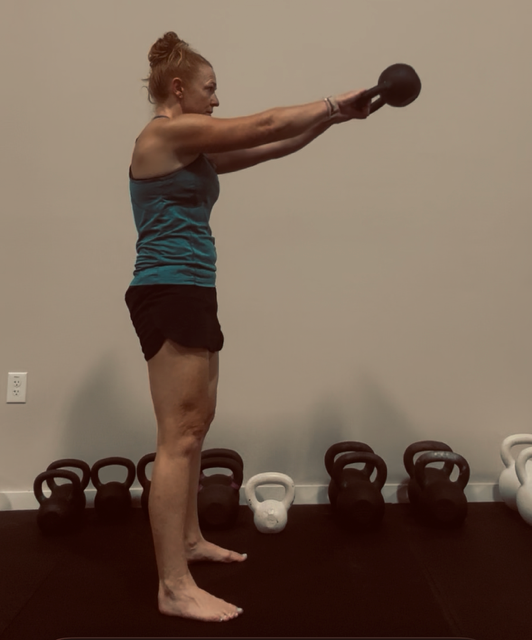
- 4. Plank at the top. Standing tall, braced, glutes locked. The bell should reach chest height on its own.
- 5. Breathe and repeat. Sharp exhale at the top, inhale on the way down. Stop the set the moment the hinge turns into a squat.
The most common mistakes we fix: squatting instead of hinging, lifting with the arms, letting the bell drop too low, and losing the brace at the top.
What the Research Says
We coach from experience, but the swing has been studied in real labs too. Here are peer-reviewed findings behind the claims above.
Six weeks of twice-weekly kettlebell swing training raised maximum strength by 9.8% and vertical jump height by 19.8% — results on par with jump squat power training.
Kettlebell swing training improves maximal and explosive strengthIn the BELL trial, three months of hardstyle kettlebell training in adults aged 59–79 improved grip strength, walking distance, deadlift strength, sit-to-stand reps, lean mass and resting heart rate, with high attendance and only minor adverse events.
Supervised high-intensity hardstyle kettlebell training in older adults: the BELL trialSix weeks of swings improved deadlift 1RM by roughly 8% and jump height by 9–10%; adding progressive loading improved muscular endurance by nearly 24%.
Periodized versus non-periodized kettlebell swing training on strength, power and muscular enduranceFour weeks of swing intervals (30 seconds on, 30 seconds off) added to regular training raised peak oxygen uptake, showing swings can build cardiovascular fitness without running.
Effects of kettlebell swing training on cardiorespiratory and metabolic demandResearch is general information, not medical advice. If you have an injury or a health condition, check with your doctor before starting any training program.
Swing Questions
How many kettlebell swings should I do?
Beginners do well with 5 to 10 sets of 10 swings, resting between sets. Quality of the hinge matters far more than total reps — we build volume once the pattern is solid.
What muscles do kettlebell swings work?
Primarily glutes, hamstrings and the whole back line, with the core, lats, shoulders and grip working hard to keep the bell under control.
Are kettlebell swings good for fat loss?
They help. Swings burn a lot of energy per minute and build muscle at the same time, but results still come down to consistency and eating well.
Are kettlebell swings safe for my back?
Done as a hinge with a braced spine, yes — many people find their back feels better once they train the swing. Done as a squat with a rounded spine, no. That is why we coach the setup before adding load.
What weight kettlebell should I swing?
Most men start around 16 kg and most women around 12 kg, but we size the bell to you on your first visit. Too light is just as common a mistake as too heavy.
Can I do kettlebell swings every day?
Yes, with sensible volume. Our programming follows 'same but different' — rotating variations of the same pattern so you train often without grinding the same joints.
Learn the Swing With a Coach
Reading about the hinge only gets you so far. Come in for a free class at 401 S. Chitalpa St., Unit 720, Leander, TX — we will size your bell and coach your swing from the first rep.